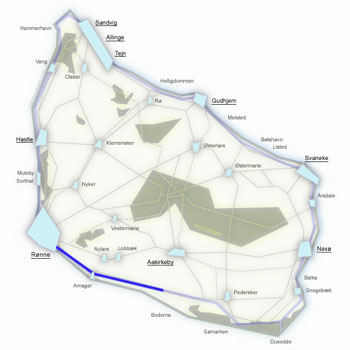
Walking tour of Rønne – history, architecture and the harbour charm of Bornholm's capital
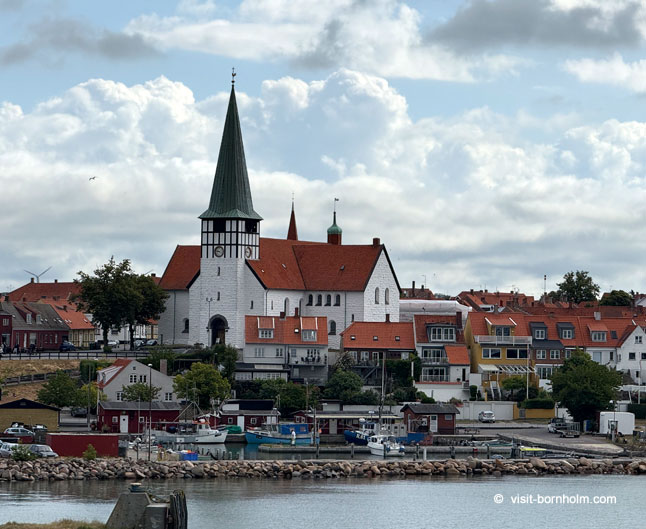
Rønne is the capital of Bornholm and the natural gateway to the island – ferries from Sweden and Poland dock here. We suggest a 4.8 km city walk that combines the harbour, cobbled lanes lined with half-timbered houses, historic monuments, museums and the main square. The route starts at the waterfront and leads through 13 stops – from an 18th-century harbour forge to the modernist Hafniahus. Allow 2 hours for a quick version or 4–5 hours with museums and a coffee break.
Walk facts
Distance
4.8 km – a route from the harbour through the centre and back
Time
Short version ~2 hrs. Full version with museums and coffee: 4–5 hrs.
Difficulty
Easy – flat urban terrain, pavements and cobblestones. Suitable for families with children
Parking / start
At the harbour waterfront next to the ferry terminal. You can also arrive by bike or BAT bus
Route – 13 stops
The route starts at the harbour and leads into the city – from the waterfront through the historic centre, museums and cobbled lanes to the quieter, less touristy districts in the south.
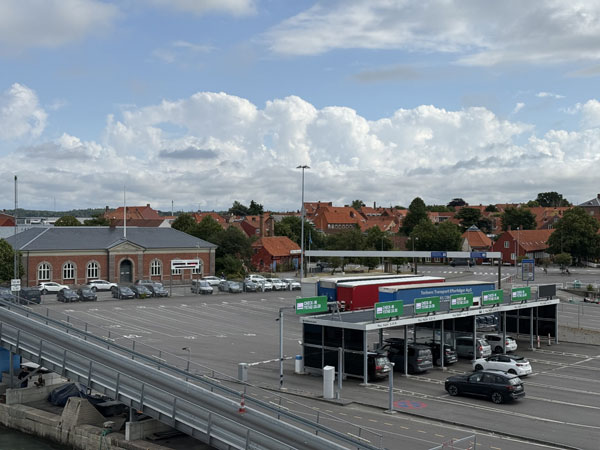
The best place to start – ferries from Ystad and Kołobrzeg dock here, and at the terminal you will find the Bornholm Velkomstcenter with maps and brochures. Park at the waterfront or lock your bike at the harbour. The entire route starts and ends here.
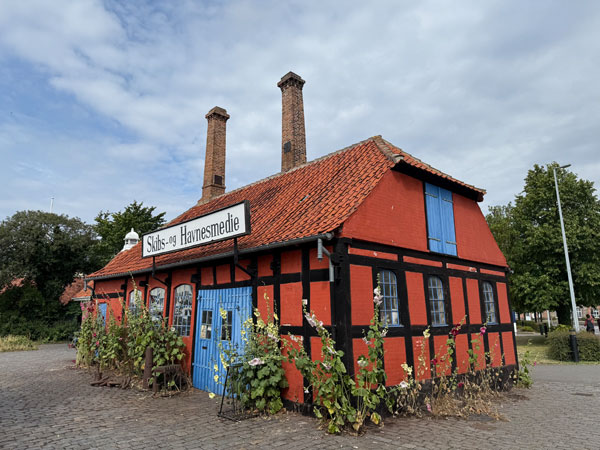
Right by the waterfront stands one of the oldest craft buildings in the city – an 18th-century forge where anchor chains and ship fittings were once repaired. A solid, low structure of stone and brick, still with its preserved blacksmith's furnace. A fine introduction to the maritime past of Rønne.
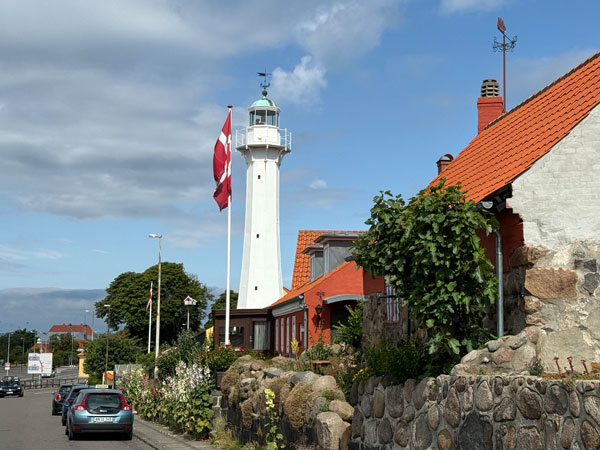
A short climb to the hill above the harbour with a panoramic view of the Baltic, the waterfront and the rooftops of Rønne. There are benches by the lighthouse – a good spot to get your bearings before entering the old-town lanes. On a clear day you can see the Swedish coast.
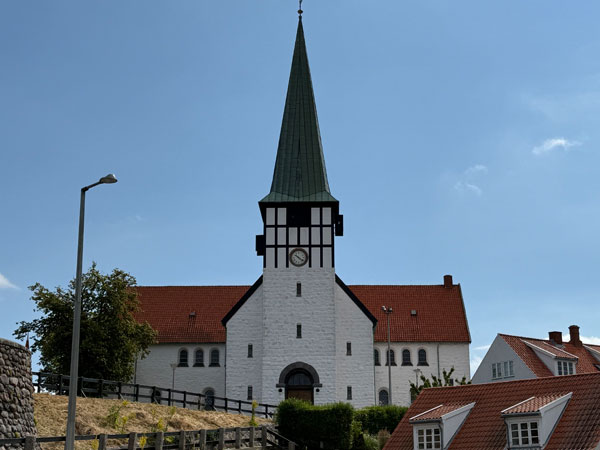
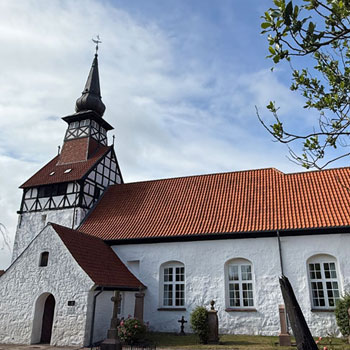
The tower of Skt. Nicolai Kirke is visible from afar and has served as a landmark for centuries. The church dates from the 15th century and is the main parish church of Rønne – inside you will find a 1600 altar, a sundial on the wall and a churchyard with gravestones of merchants and captains. Free admission.
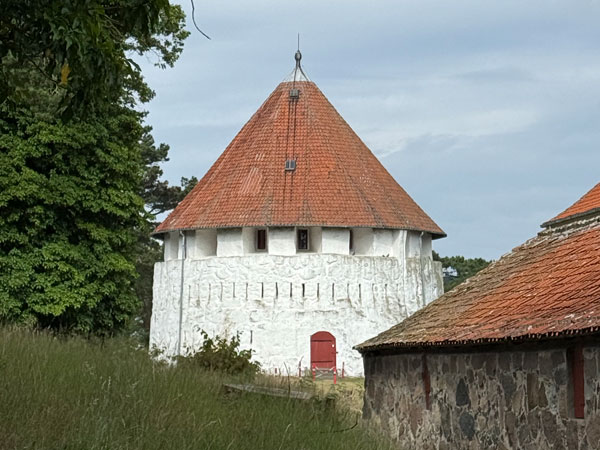
Kastellet – a 17th-century fortress, now a military museum. Exhibits cover the Swedish siege of 1658, the Bornholm uprising, the German occupation and the Soviet bombing of 1945 – two days that changed the island. Worth a visit even for just 15 minutes for the fort itself and the view from the ramparts. Entry optional.
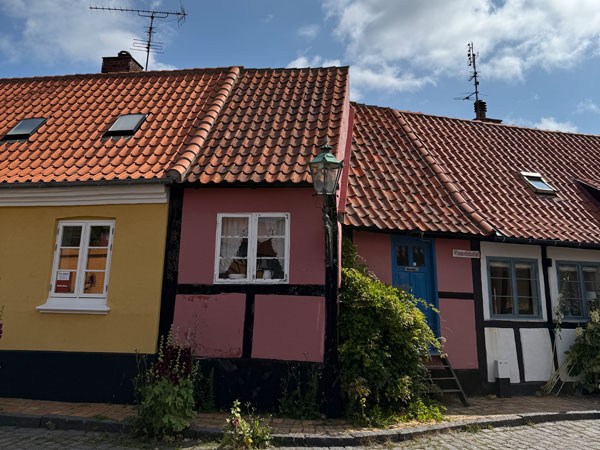
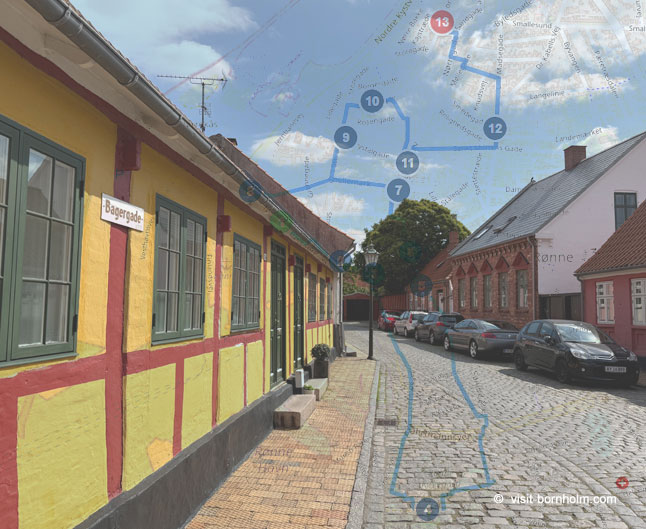
A cobbled lane lined with hollyhocks leads to the smallest house in Rønne – a low building with distinctive blue doors. It is the most photographed spot in town and the essence of the Bornholm style: flowers, colourful walls and silence just a hundred metres from the main street.
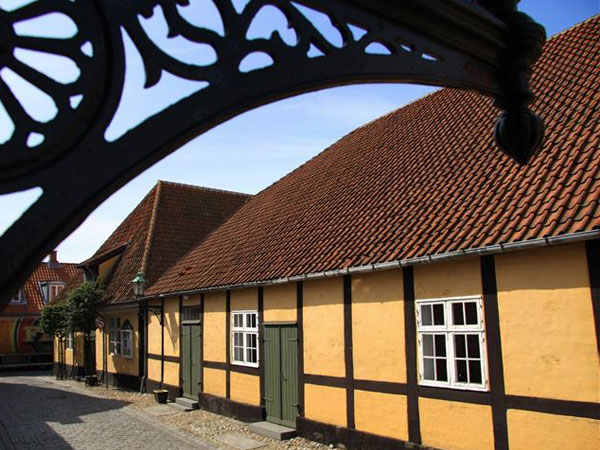
The oldest continuously operating theatre in Denmark – opened in 1823. The small building houses a neoclassical auditorium seating 250, where performances are still held today. A quick look at the façade and the historical plaque is enough.
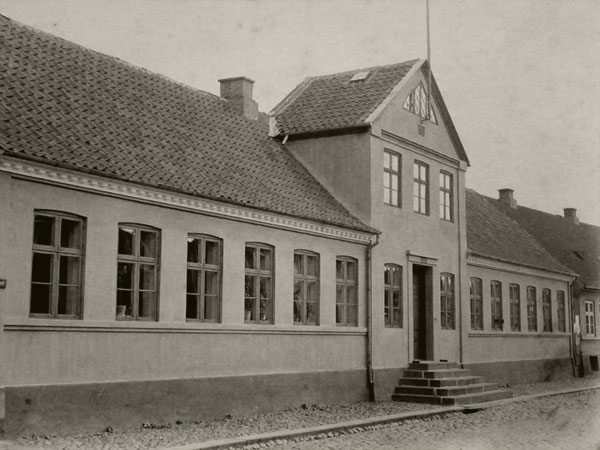
The former residence of the island's military commandant – a discreet yet historically significant 18th-century building. For centuries Bornholm's defence was directed from here. Now privately owned, it can be viewed from outside; read the information plaque.
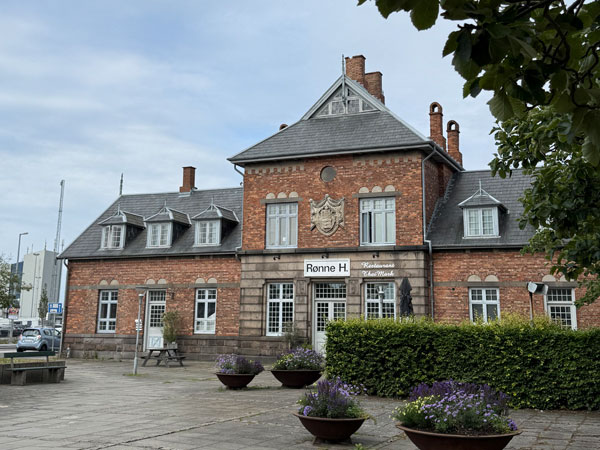
The building of the former railway station, a remnant of De Bornholmske Jernbaner – the railway that connected Rønne with Nexø and other towns from 1900 to 1968. Now repurposed, but the period architecture is preserved. An interesting piece of the island's industrial history.
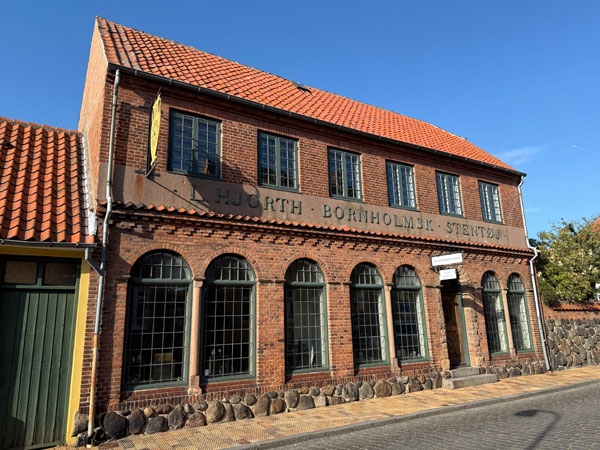
A living ceramics museum housed in the original factory buildings from 1859. Craftspeople work in front of visitors – you can watch wheel-throwing, glazing and firing. Hjorths is one of the symbols of Bornholm craftsmanship. Allow the full 45 minutes to explore and perhaps buy a souvenir straight from the workshop.
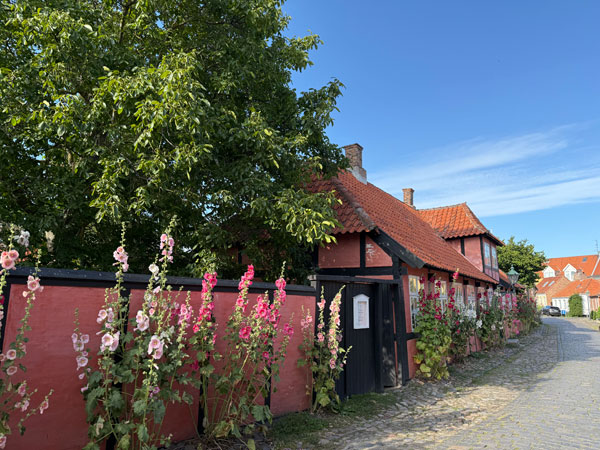
An 18th-century merchant estate with a preserved courtyard, original furniture and fittings. Stepping inside, you travel back 250 years – an open-hearth kitchen, a wallpapered parlour and the merchant's bedroom. One of the best-preserved bourgeois interiors on Bornholm.
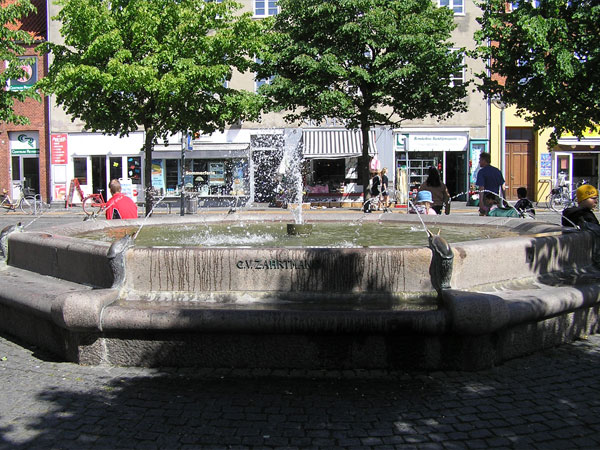
The main square of the city – the centre of life in Rønne for centuries. Surrounded by townhouses, cafés, the town hall and local shops. In summer it hosts markets, concerts and festivals. An ideal spot for a longer break: coffee, ice cream, a sandwich from a local bakery. From the square it is a short walk to every corner of the old town.
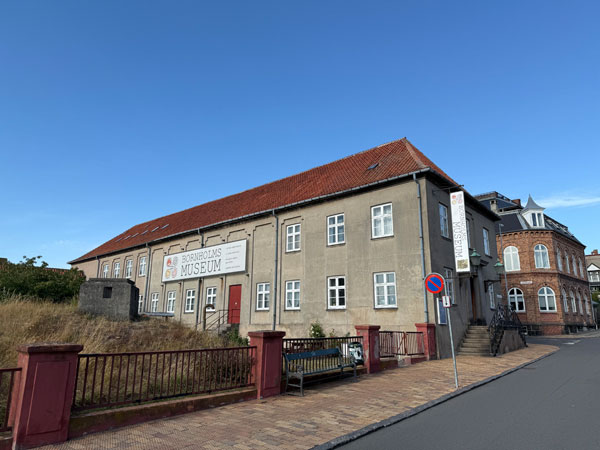
The island's main museum – from the Stone Age through the Vikings and the Middle Ages to the 20th century. Collections include gold bracteates, runic stones, ship models and an exhibition on the Soviet occupation of 1945–46. If you have time for one museum on Bornholm, this should be it. Entry optional.
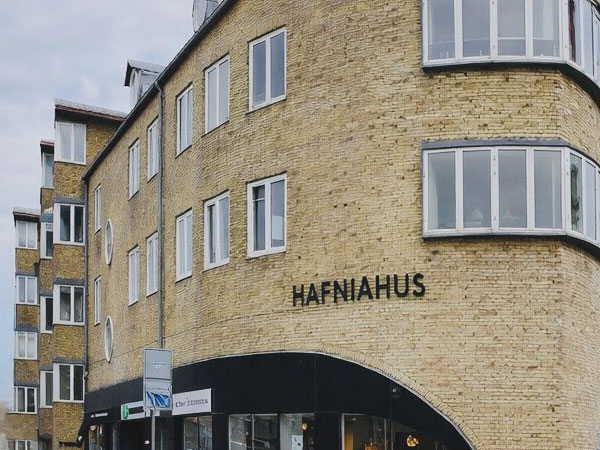
An example of post-war modernist architecture – a completely different style from the half-timbered houses of the old town. The building was constructed as part of the city's reconstruction after the 1945 bombing and shows how Rønne blends several architectural layers. It ends the walk in a quieter, less touristy district.
The loop closes – from Hafniahus it is about 20 minutes at a leisurely pace back to the waterfront. It is worth returning by a different route and walking through the villa district or along the seaside promenade. In the evening the harbour takes on a special atmosphere.
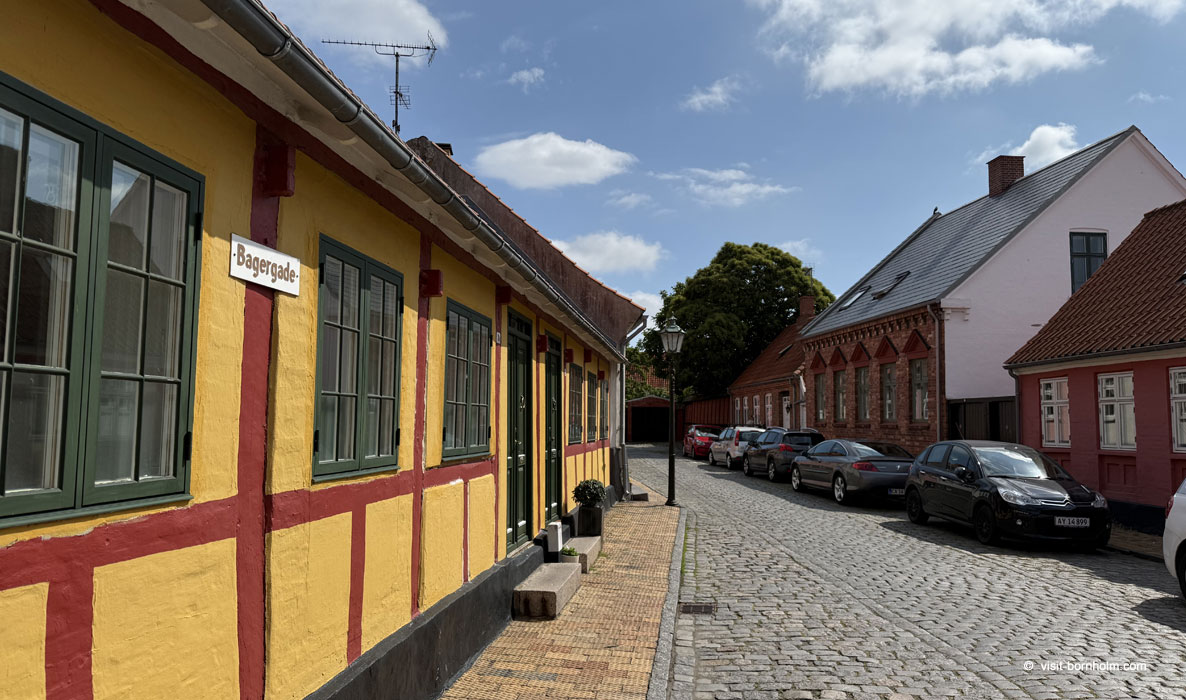 Old-town lanes of Rønne – half-timbered houses, hollyhocks and cobblestones
Practical information
Walking time
Short version without entering attractions: approx. 2 hrs. With museums (Hjorths, Bornholms Museum, fort) and a coffee break: 4–5 hrs.
Getting there
Ferries from Ystad (Bornholmslinjen) and Kołobrzeg (Polferries) dock directly at the harbour. BAT buses depart from the station next to the terminal.
When to go?
All year round. Museums are open seasonally (May–October). The harbour and centre are appealing at any time. An ideal walk for your first or last day on the island.
Where to grab a coffee?
Store Torv (stop 11) – cafés around the square. At the harbour – fish restaurants and ice-cream spots on the waterfront. In the centre, Snellemarkcentret – a shopping centre with a café.