Svaneke Harbour (Svaneke Havn)
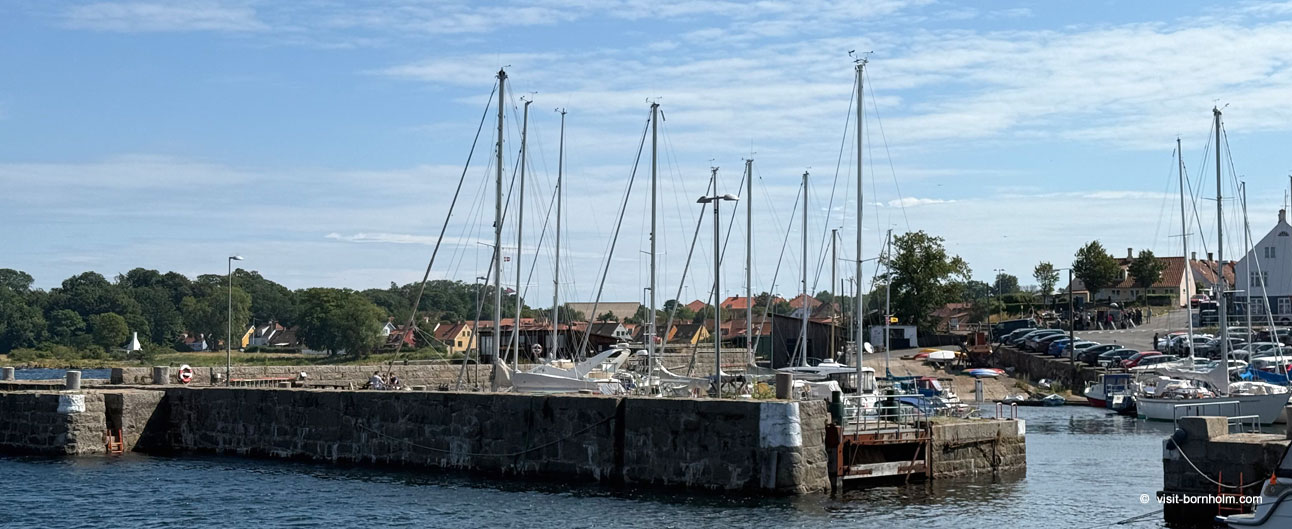
Svaneke Havn is a charming, small harbour that captivates visitors with its unique atmosphere. Although manoeuvring can be a bit challenging and berths are limited, it more than makes up for it with its exceptional location – right in the heart of Bornholm’s most beautiful town. It is a must-visit stop for sailors seeking genuine Bornholm ambience, local flavours, and historical sights.
Good to know
- South-eastern Bornholm, between Årsdale and Listed.
- Coordinates: 55°08'20N 015°08'55E.
- Svaneke – the smallest town in Denmark with official town rights, known as the "sunny town" (it boasts the highest number of sunshine hours in the whole of Denmark).
Svaneke Havn – a practical and well-sheltered harbour on Bornholm
The harbour in Svaneke offers solid granite quays, good shelter from easterly winds, easy access to water and electricity, and a safe approach for yachts.
Characteristics and access
Maximum depth: 3.9 m.
Approach: from NE within the white light sector 208.5°–222°, then follow the leading line 297° (which can be difficult to spot during daylight).
The harbour has a storm gate – it is closed during strong NE and E winds. Day signal: black ball; night signal: 3 red lights.
In stormy conditions, the entrance may be very difficult.
Facilities and amenities
Berths for 20–25 yachts.
Mooring available in three harbour basins (depending on space).
Water and electricity on the quay.
Toilets and showers in the harbour building.
Slipway for small craft.
Restaurants, shops, bakeries and smokehouses right next to the harbour.
Nearby attractions
Historic town centre – colourful half-timbered houses and cobbled streets.
The water tower designed by Jørn Utzon (architect of the Sydney Opera House). In 2005 its silhouette appeared on the Danish 20-kroner banknote.
Svaneke Bryghus brewery – the first on Bornholm after a 45-year break, producing unfiltered, traditionally brewed beer.
Chocolate shop, ice-cream shop and art galleries – a rich offer of local craftsmanship.
Fish smokehouse – an essential culinary stop on Bornholm.
Safety
The approach can be difficult in daylight – the 297° leading line may be hard to see, especially in strong sunlight. Caution is recommended.
Rocks around the entrance – maintain an accurate approach course, especially at night and in poor visibility.
Practical advice – if strong NE/E winds are forecast, consider staying in Nexø or Listed instead.
History
The first references to Swanwick / Swencke date back to the mid-14th century and relate to trade with Poland and Germany.
In 1410 a description of the landing place appears.
1816 – construction of the harbour with two basins.
1843 – a postal connection with Christiansø was established.
1872 – a storm damaged the harbour so severely that it was closed.
1874–77 – reconstruction and expansion with a third basin.
1907 – construction of the northern breakwater.
1912 – rebuilding of the quay to accommodate larger steamships.
1939 – deepening and modernisation of the entrance.