The History of Bornholm – From the Vikings and Hammershus to the Cold War
From ancient settlements, through the age of the Vikings and medieval fortresses, to the dramatic events of the 20th century, Bornholm’s past provides a fascinating backdrop to today’s welcoming, visitor-friendly island. History here is not confined to museums – it can be discovered in the landscape, the architecture and the everyday rhythm of island life.
We invite you on a journey through prehistory, the Viking Age, medieval fortresses and churches, the era of fishermen and quarrymen, and on to the Second World War and the Cold War, revealing how history lives in harmonious balance with the present on Bornholm.
From this article you will discover:
- how Bornholm’s history has developed from prehistory to the present day
- the role the island played during the Viking Age and the Middle Ages
- why Hammershus and the round churches have become symbols of the island
- how the sea, fishing and granite shaped the lives of local communities
- what traces were left by the Second World War and the Cold War
- why Bornholm is today an ideal destination for lovers of history and nature
Prehistory – where it all began
The earliest traces of human settlement
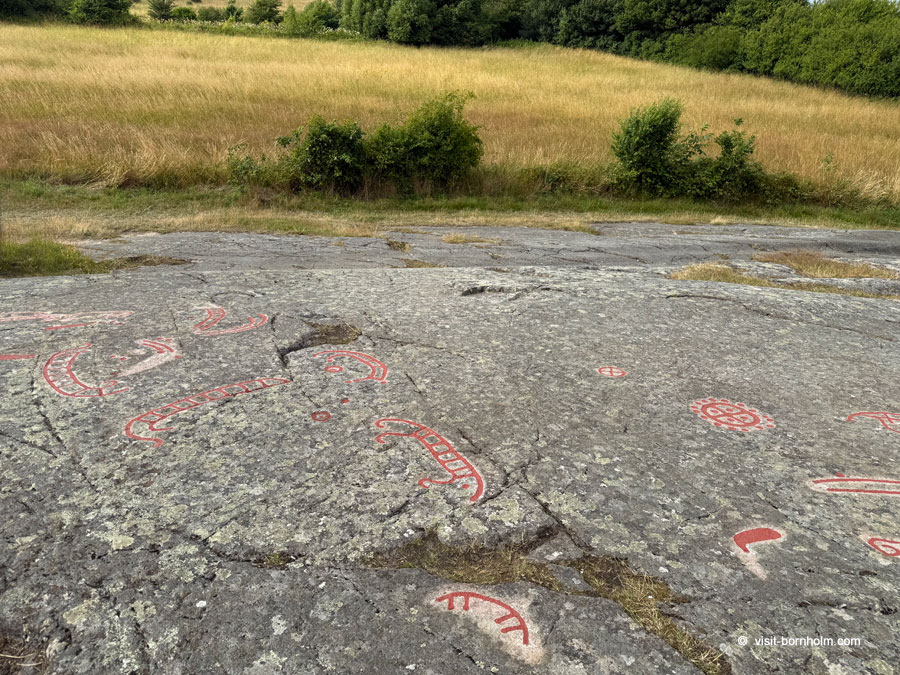
The history of Bornholm reaches back to the time when the first settlers arrived after the retreat of the glaciers. Living close to nature, they made use of the sea, forests and rocky terrain. Their legacy survives in the form of rock carvings – symbols of the sun, boats and human figures carved into stone, regarded as some of the oldest cultural monuments in the Baltic region.
Rispebjerg – the spiritual heart of the ancient island
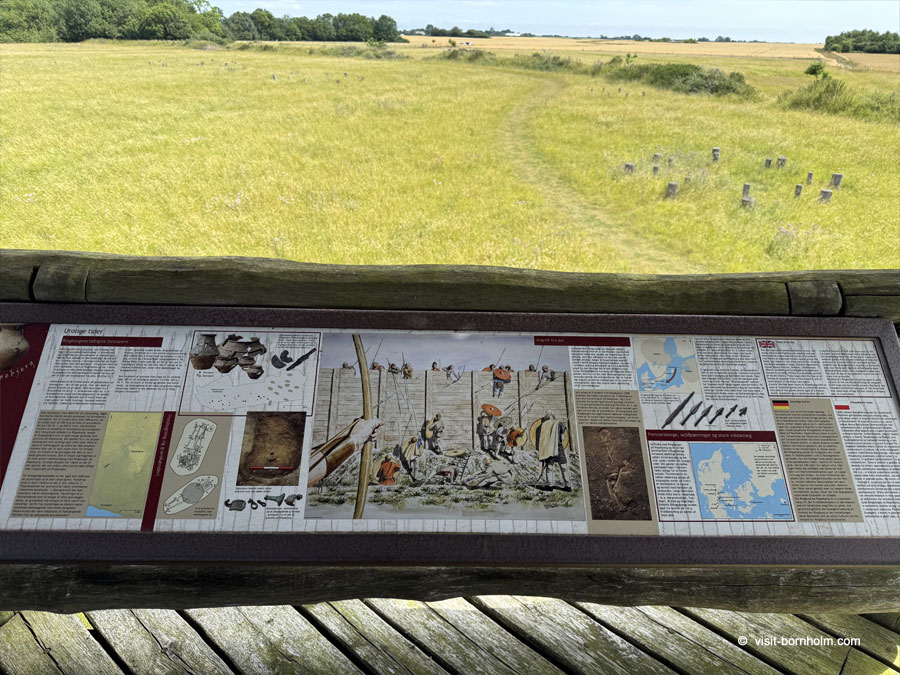
One of the most important sites linked to this era is Rispebjerg, a vast archaeological area located in the central part of the island. During the Stone and Bronze Ages, it served as a significant centre of worship. Stones engraved with solar symbols and ritual signs have been discovered here, offering insight into the beliefs of Bornholm’s earliest inhabitants.
Today, Rispebjerg is a peaceful walking area with information boards – an ideal place for a first encounter with the island’s history. The silence and natural surroundings make it easy to imagine the spiritual importance this site held thousands of years ago.
The Viking Age – an island on the sea routes
Bornholm as a trading hub
During the Viking Age, Bornholm gained new importance thanks to its location at the crossroads of Baltic sea routes. The island became a place of stopovers, trade and cultural exchange. Archaeological finds – coins, jewellery and weapons – confirm intensive contacts with other parts of Scandinavia and Europe.
Nordic heritage for today’s visitors
Although no monumental Viking settlements have survived, their presence is clearly reflected in museums and local historical narratives. This is an excellent moment to understand the island’s maritime identity and its role in the history of the Baltic Sea.
Hammershus – medieval power above the sea
The fortress that ruled the island
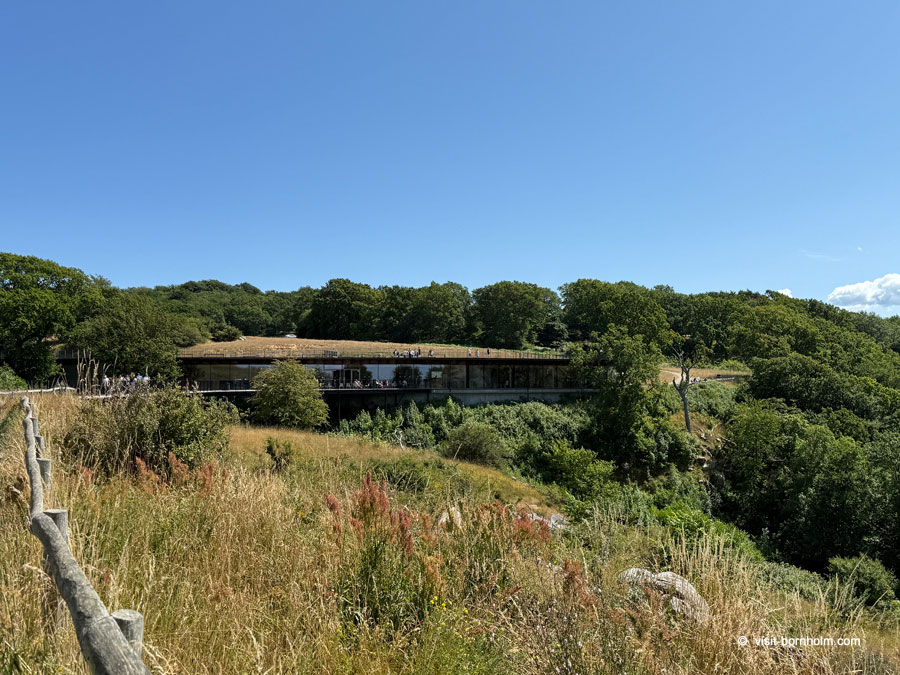
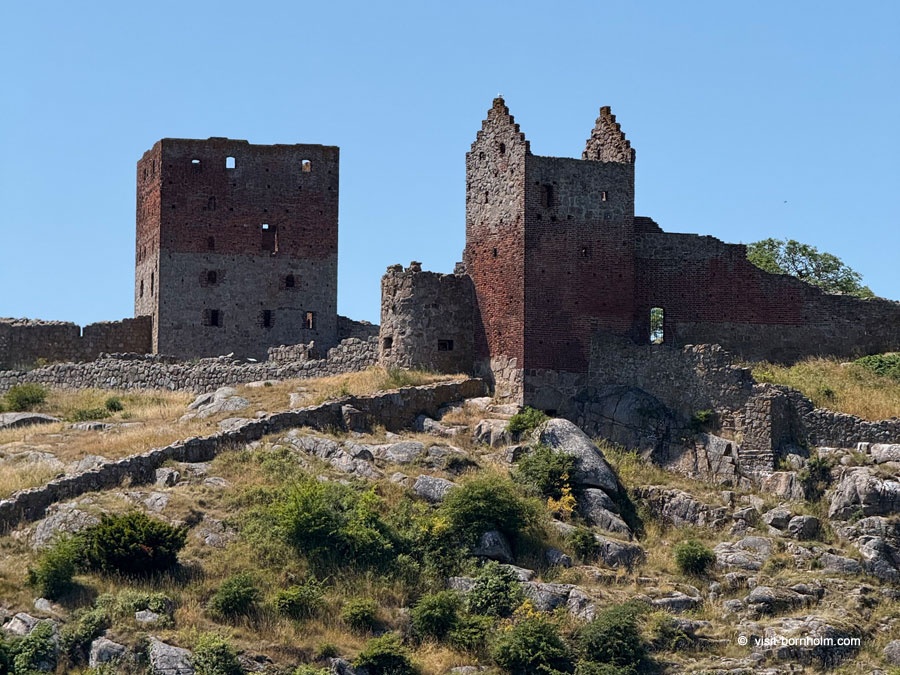
The most recognisable landmark on Bornholm is Hammershus – a monumental fortress built in the 13th century on the steep cliffs of the island’s northern coast. Its mighty walls tower above the Baltic, recalling a time when Bornholm was the subject of political and military rivalry.
For centuries, Hammershus served as the centre of power. It was the scene of conflicts between the kings of Denmark and the Archbishops of Lund, as well as sieges, betrayals and shifts in authority that shaped the fate of the entire island.
Visiting today – where history meets landscape
Today, the ruins of Hammershus are excellently prepared for visitors. Marked routes lead through former gates, defensive walls and courtyards. A walk around the fortress is both a history lesson and a memorable landscape experience, with spectacular views over the sea, the rocky coastline and the forests of northern Bornholm.
Round churches – faith and defence combined
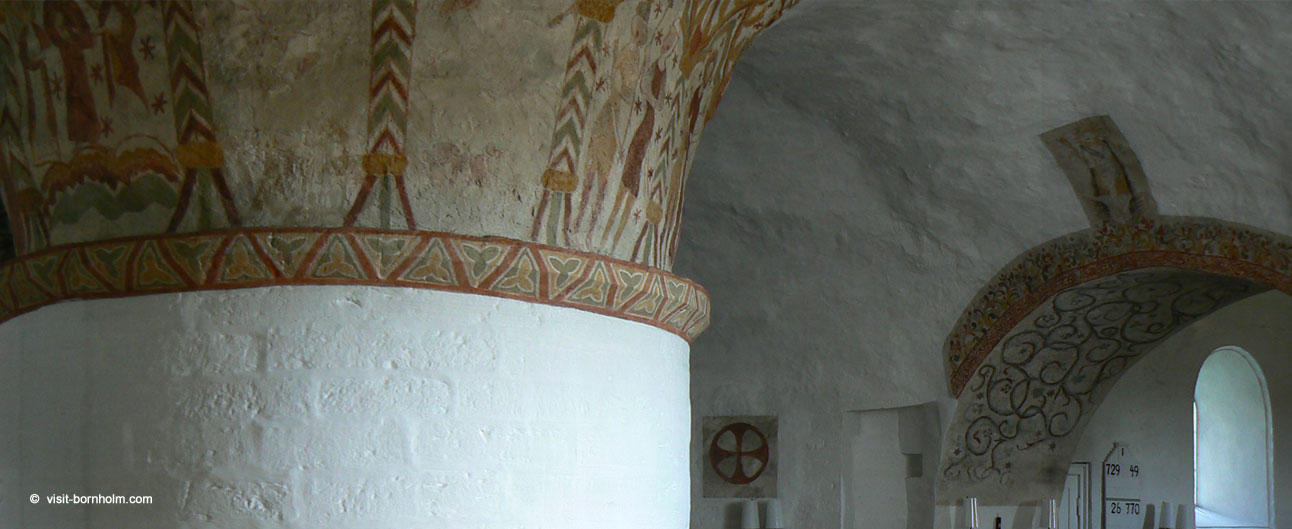
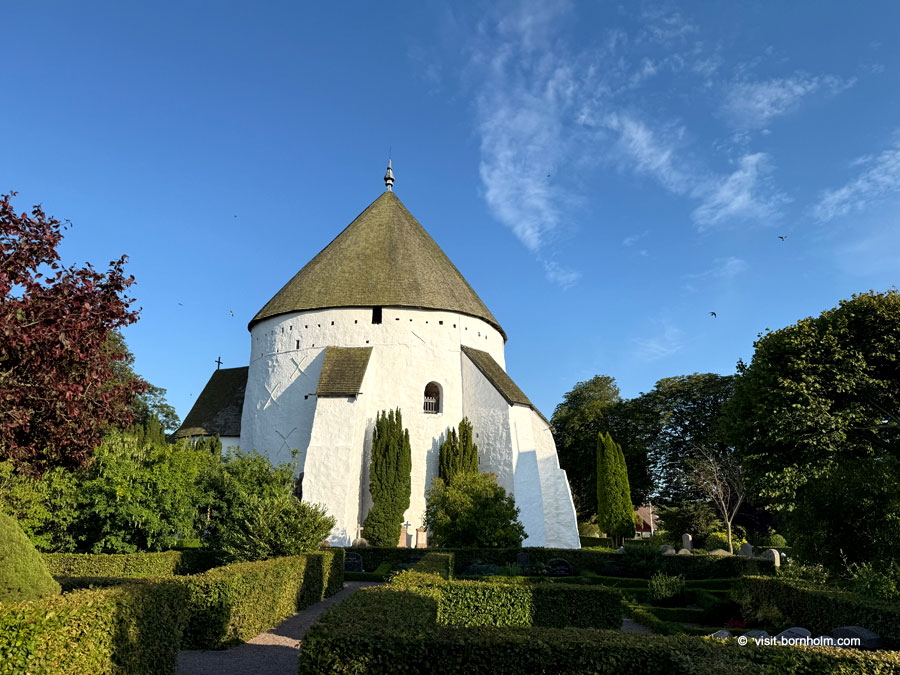
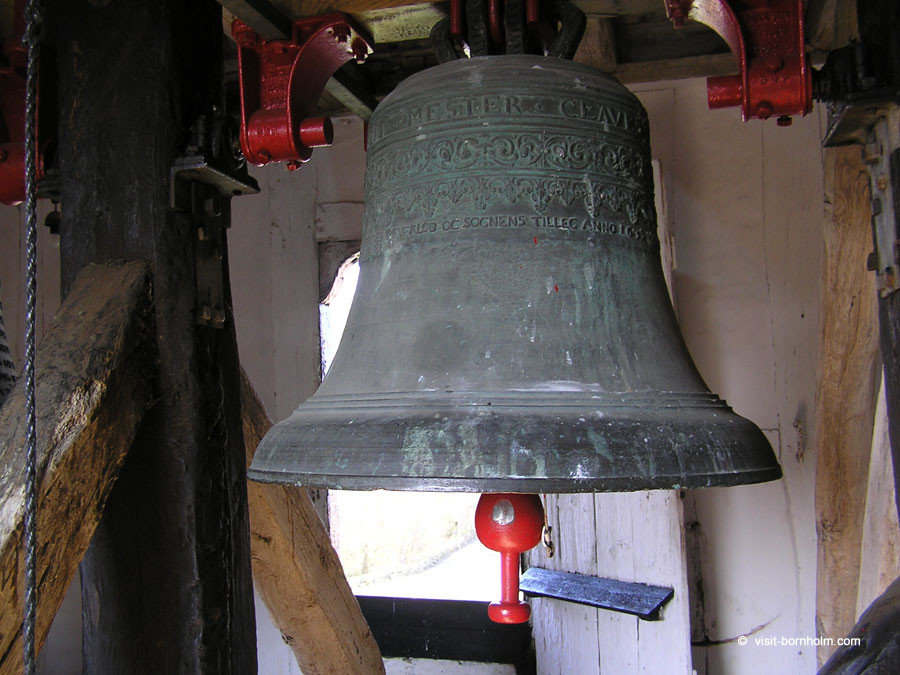
One of the most distinctive features of Bornholm’s medieval landscape is its round churches. Built in the 12th and 13th centuries, they served not only religious purposes but also defensive ones – their thick walls and small windows offered protection in turbulent times.
The most famous example is Østerlars Rundkirke, the largest round church on the island. Nylars Rundkirke is also well worth a visit, particularly for its well-preserved medieval wall paintings.
For modern visitors, these churches are a unique testimony to how everyday life, faith and the need for security intertwined on medieval Bornholm.
Sea and stone – fishing and granite
For centuries, everyday life on Bornholm rested on two pillars: the sea and stone.
Fishing – the heart of coastal towns
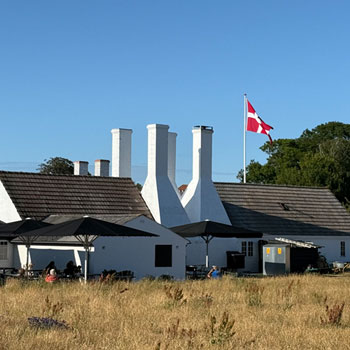
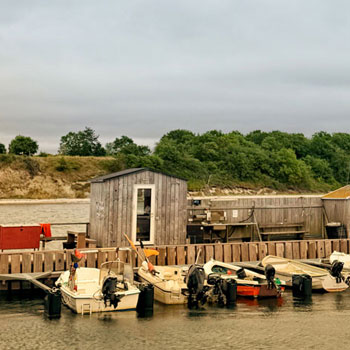
Fishing has long been the backbone of the local economy. Harbours, smokehouses and fishing traditions shaped the character of towns such as Rønne and Nexø. To this day, smoked herring remains one of the island’s culinary symbols, while former smokehouses often function as restaurants and museums.
Granite – Bornholm’s building stone
The island’s second great resource was granite. Quarries, especially in northern Bornholm, supplied material used in harbour construction, road building and architecture. Granite blocks from Bornholm were exported beyond the island, and this raw, rocky aesthetic still defines the landscape and built environment today.
The Second World War – traces of a difficult past
Destruction and a new beginning
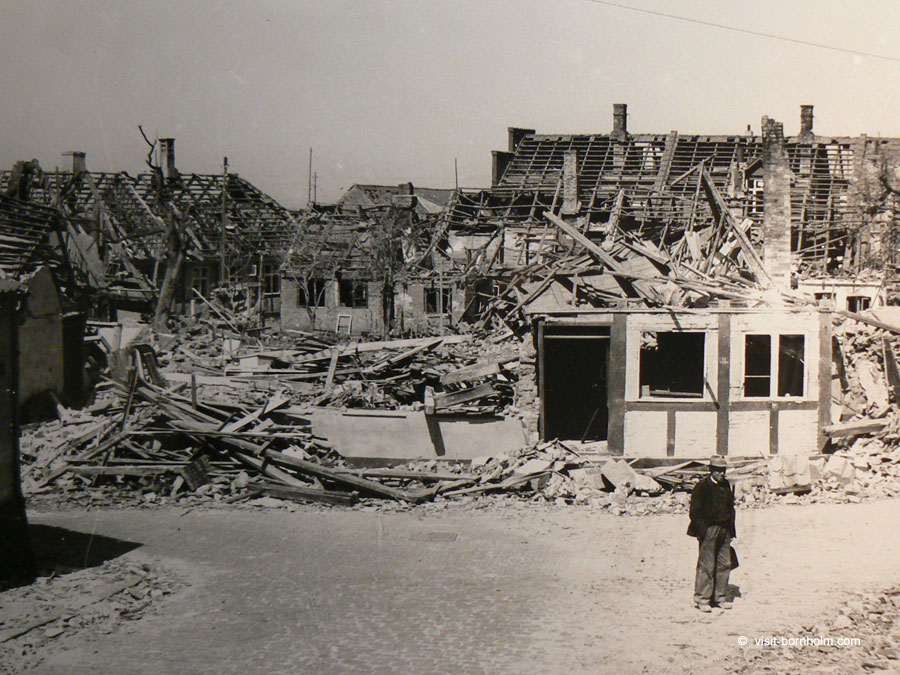
Bornholm’s experience of the Second World War was unique. In May 1945, the island was bombed, and the towns of Rønne and Nexø suffered extensive destruction. Post-war reconstruction gave them a more modern appearance, still visible in their architecture today.
Soviet presence on the island
Bornholm was the only part of Denmark where Soviet troops were stationed after the war. The Red Army remained on the island until 1946, leaving a strong imprint on the post-war atmosphere and on Bornholm’s later strategic significance.
Wartime fortifications
Due to its location, Bornholm was intended to become an important military base. Traces of these plans can still be found, for example around Dueodde, where remains of light and medium anti-aircraft artillery positions are scattered among the dunes – Flakstellungen and smaller Flak guns.
The Cold War – Bornholm on the edge of East and West
The island’s strategic location
After the war, Bornholm found itself at the meeting point of two political worlds. Its proximity to Eastern Bloc countries gave the island significant military and intelligence importance.
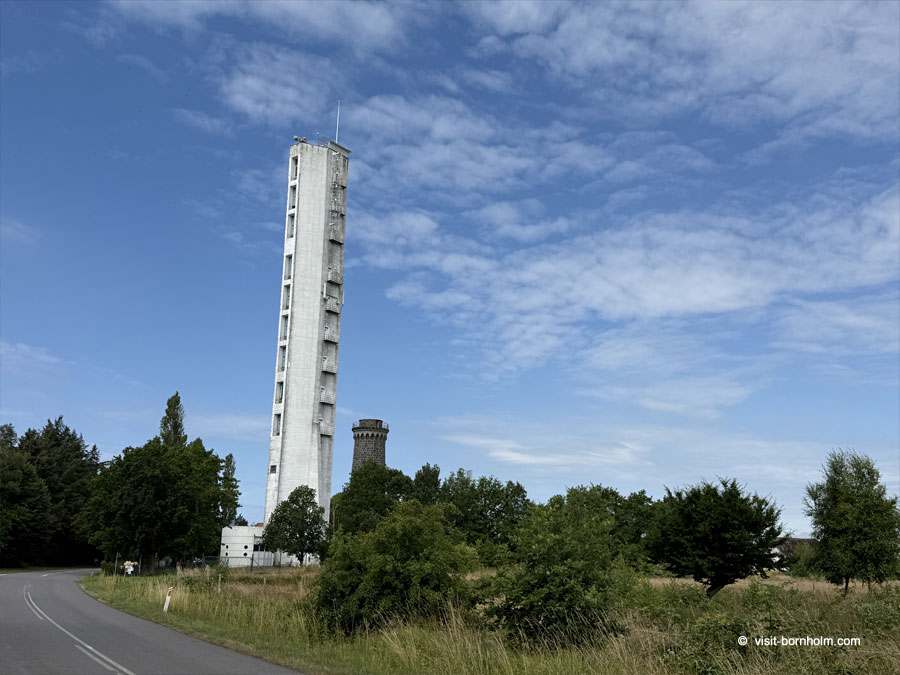
Bornholmertårnet
One of the most intriguing sites from this period is Bornholmertårnet, an observation tower in the Dueodde area. From the 1980s onwards, it was used for radio surveillance. Today, it serves as a museum and educational centre with a viewing platform.
Bornholm today – history as part of the experience
A journey through the ages in one place
Prehistoric sites, medieval fortresses and churches, fishing harbours, post-war architecture and Cold War installations together form a coherent story on Bornholm. Exploring the island is a journey through time – easily undertaken on foot, by bicycle or by car.
An ideal destination for the curious traveller
Today, Bornholm is a calm, welcoming island, perfectly prepared for visitors. History is not a burden here, but an asset – an invitation to discover a place where the past can be read in the landscape, and the present grows from it in natural harmony.
Good to know
- You can read more about museums on Bornholm here – Bornholm Museums