Churches on Bornholm
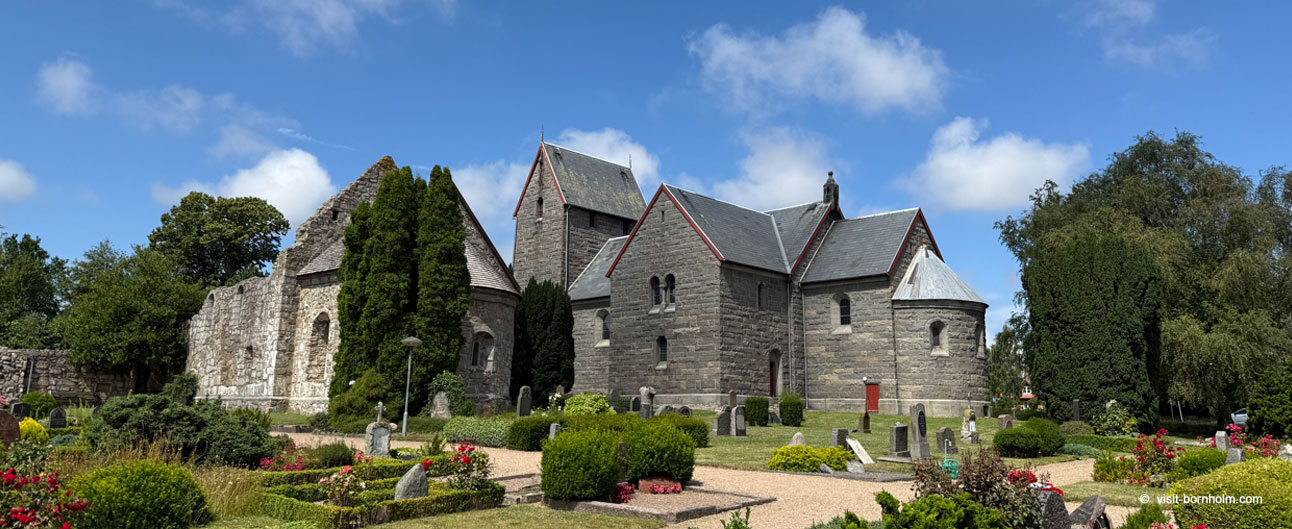
Churches on Bornholm were built from the Middle Ages to modern times. Many of them have preserved their original architecture and valuable interior details, such as wooden altars and medieval frescoes.
Scattered across the island, the churches reflect Bornholm’s spiritual and historical identity. They are an important part of the local landscape and culture, attracting tourists and history enthusiasts.
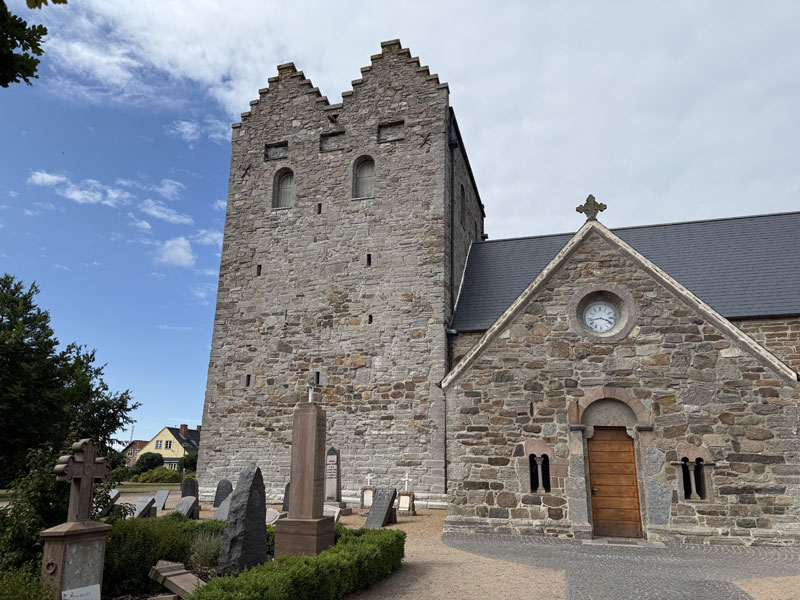
Aa Kirke (Aakirkeby)
Aa Church, one of the oldest and largest on Bornholm, rises in the center of Aakirkeby. Originally dedicated to St. John the Baptist, it impresses with its two towers and 12th-century decorations. The most valuable artifact is the baptismal font made by the Gotlandic master Sigraff with a runic inscription. The church underwent renovations in 1874 and 1968, and its name comes from the two rivers surrounding the building: Læså and Grødby å.
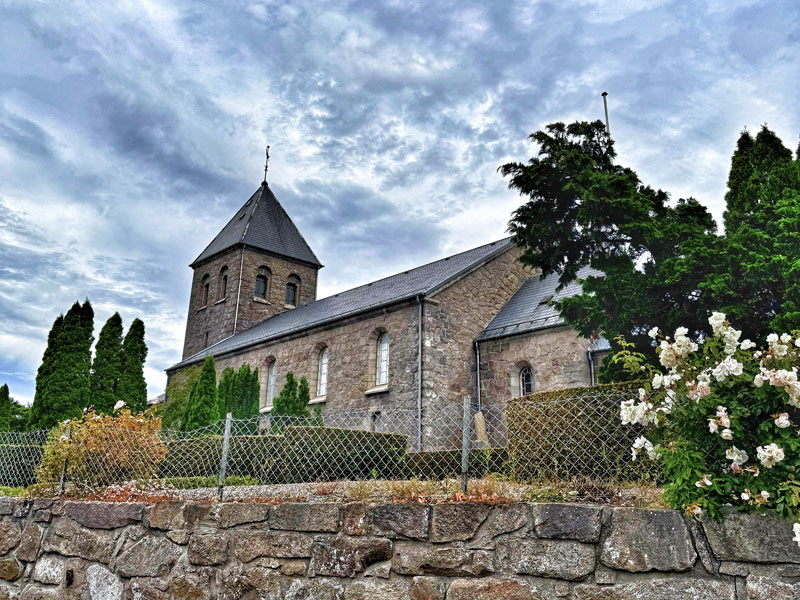
Klemens Kirke (Klemensker)
St. Clement’s Church was built in 1882 from granite, replacing an earlier medieval structure. Most of its interior furnishings date from this period, giving the space a unified character. In 1960, the church was restored, with careful attention paid to preserving local artistic traditions. The interior decorations reflect Bornholm’s craftsmanship and highlight the close connection between the church, the island’s history, and its culture.
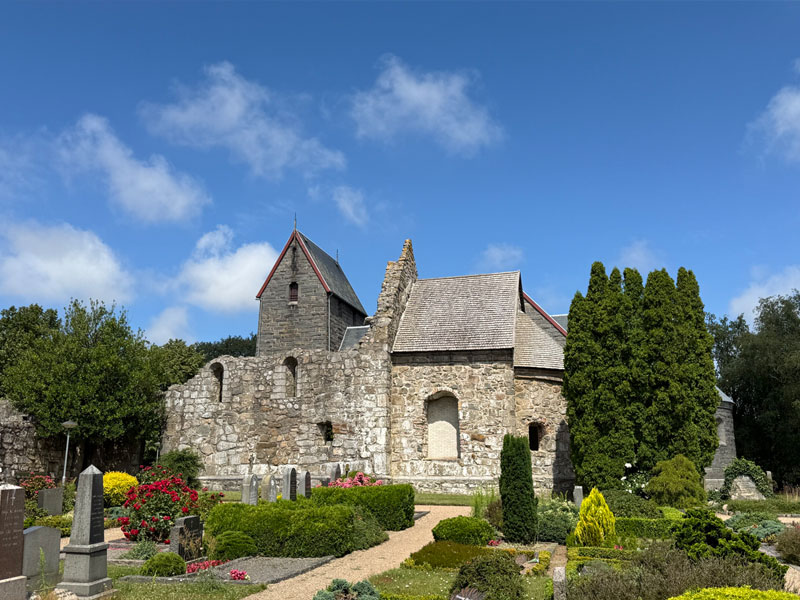
Østermarie Kirke
The church in Østermarie was consecrated in 1891 and built of characteristic "Paradise granite," designed by architect Andreas Clemmensen. Within the parish, you can also find the ruins of an older church dating back to around 1200, known for its unique stone roof structure. The interior features an altar restored by Bornholm artist Poul Høm, as well as valuable elements such as a 13th-century Gotlandic baptismal font and a Nuremberg baptismal basin from 1575. In the past, the church could accommodate up to 1,000 worshippers, though today it seats around 400.
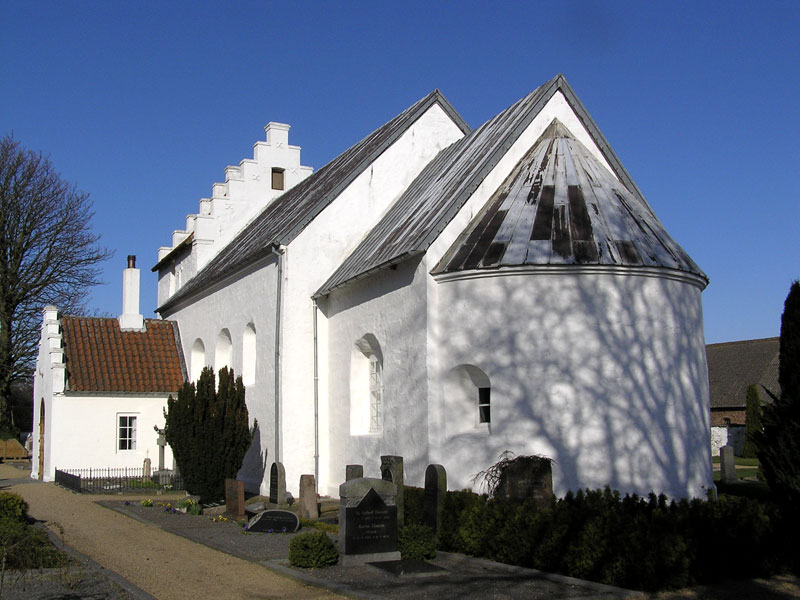
Skt. Peders Kirke
Skt. Peders Kirke is one of Bornholm’s oldest and most atmospheric churches, set in the peaceful village of Pedersker just south of Aakirkeby. This stone-built church, guarding more than 900 years of history within its walls, invites travellers to discover some of the island’s earliest traces of Christianity.
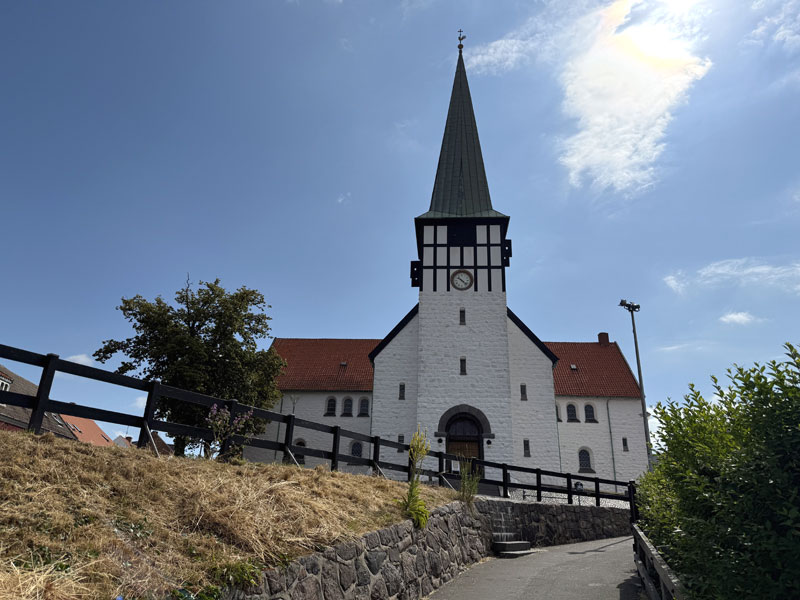
Skt. Nicolai kirke
Skt. Nicolai Kirke is the most prominent church in Rønne, its tower rising above the harbour and welcoming travellers arriving on Bornholm. This historic church, combining medieval stonework with later architectural additions, offers a unique blend of architecture, culture and the town’s maritime heritage.
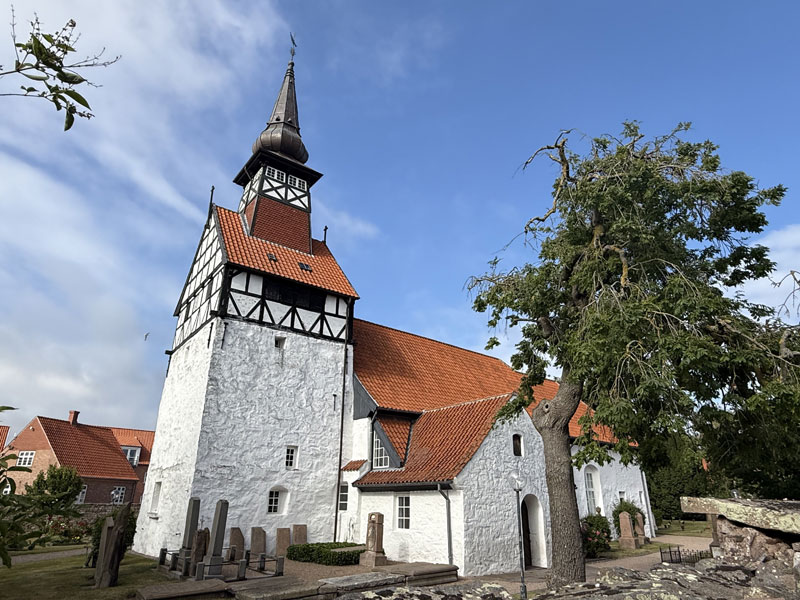
Nexø kirke
Nexø Kirke is one of the oldest buildings in the port town of Nexø on Bornholm's eastern coast. A former seafarers' chapel dedicated to St Nicholas, it has been extended since the 14th century and is distinguished by its characteristic onion-shaped copper spire from 1910. Inside you will find a 17th-century pulpit, a baptismal font carved from Nexø sandstone and decorations by Bodil Kaalund. The church survived the Soviet bombardment in May 1945.
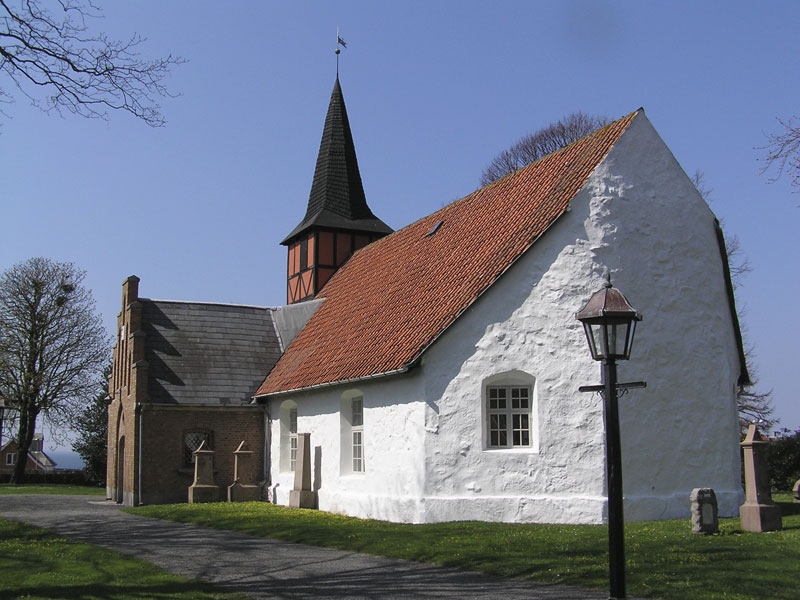
Hasle kirke
A Late Gothic church from the 15th century on a hill in Hasle, overlooking the harbour on Bornholm's western coast. Built of fieldstone and covered with white render, it houses a remarkable carved triptych altarpiece from Lübeck (early 16th c.), a Flemish Renaissance pulpit and a Gotland limestone baptismal font from the 13th century. The old churchyard is home to the Marevad Runestone from c. 1100.
Romanesque churches on Bornholm, unlike the island’s famous round defensive churches, feature a more traditional design of single-nave granite buildings typical of 12th-century rural Danish architecture. They are characterized by simplicity and austere beauty – their massive walls, small windows, and stone portals reflect both the faith and practicality of Bornholm’s early inhabitants. Many of them, such as the churches in Klemensker, Østermarie, and Ibsker, have preserved original baptismal fonts made of Gotlandic limestone, decorated with plant motifs and runic inscriptions. These churches represent a valuable record of early medieval craftsmanship and testify that Bornholm was already, in Romanesque times, an important cultural bridge between Scandinavia and the rest of Europe.


