Port of Nexø (Nexø Havn)
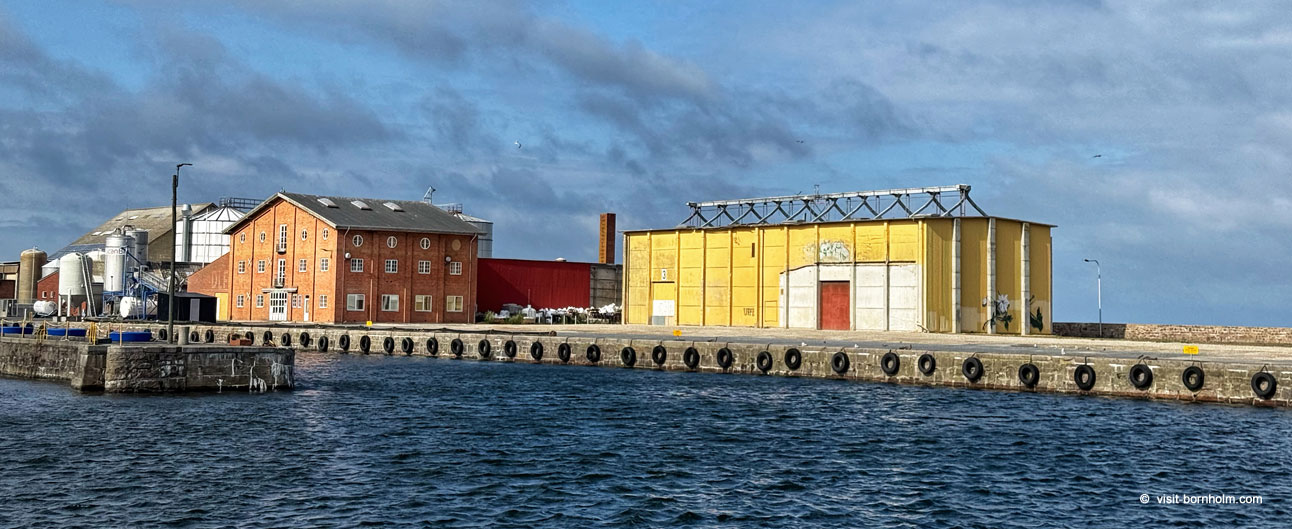
Nexø Havn is the largest fishing port on Bornholm, also serving as the main ferry and commercial port on the island’s eastern coast. Spacious, well-equipped, and conveniently located near the town center, it’s an ideal spot for sailors and visitors seeking services, infrastructure, and urban amenities.
Good to know
- Baltic Sea, eastern coast of Bornholm
- Coordinates: 55°03'36N 015°08'12E
- Approach along leading line 232°. During the day, use the line between the left edge of Nexø Church and the right edge of the southern breakwater head as a guide.
The Historic Fishing Port – Nexø Havn
Nexø Havn is the second-largest port on Bornholm. Once a center of fishing activity, today it is a modern commercial and yacht harbor that retains its traditional seaside character.
Characteristics and Access
Maximum depth: 4.7 m.
Berths for around 70 yachts.
Mooring available in the yacht basin and in the basin near the rescue vessel.
In strong NE and E winds, entry can be difficult due to heavy swell in the commercial harbor; with S and SE winds, an outgoing current of up to 1 kt may occur, and along the shore up to 1.5 kt.
Capacity and Infrastructure
Berths: approx. 70
Facilities: full sanitary amenities (toilets, showers), laundry, water and electricity (220 V), repair workshops, service facilities, and slipway.
Nearby Attractions
Museums by the harbor: Nexø Museum – showcasing the town’s history, maritime rescue, and World War II. Railway Museum – presenting the history of the Nexø–Dueodde railway line.
Tropical Butterfly Park – 500 m from the port, featuring large exotic butterflies from around the world.
Numerous restaurants, shops, and tourist services are located in the town center.
Safety
The port is supervised and well-marked, but in strong NE and E winds, entry can be challenging, and currents or swell may complicate maneuvering.
Navigation is possible both day and night; in changing weather, a cautious approach is recommended.
History
Nexø received its town charter in 1346.
A new harbor basin was completed in 1879, and Denmark’s first municipal dry dock was built here in 1892.
The town was heavily damaged during the bombing in May 1945 – reconstruction included the port and central area.
Today, the port operates as one of Denmark’s largest fishing harbors, as well as a ferry and yacht port.