Discover Bornholm's Waterfalls
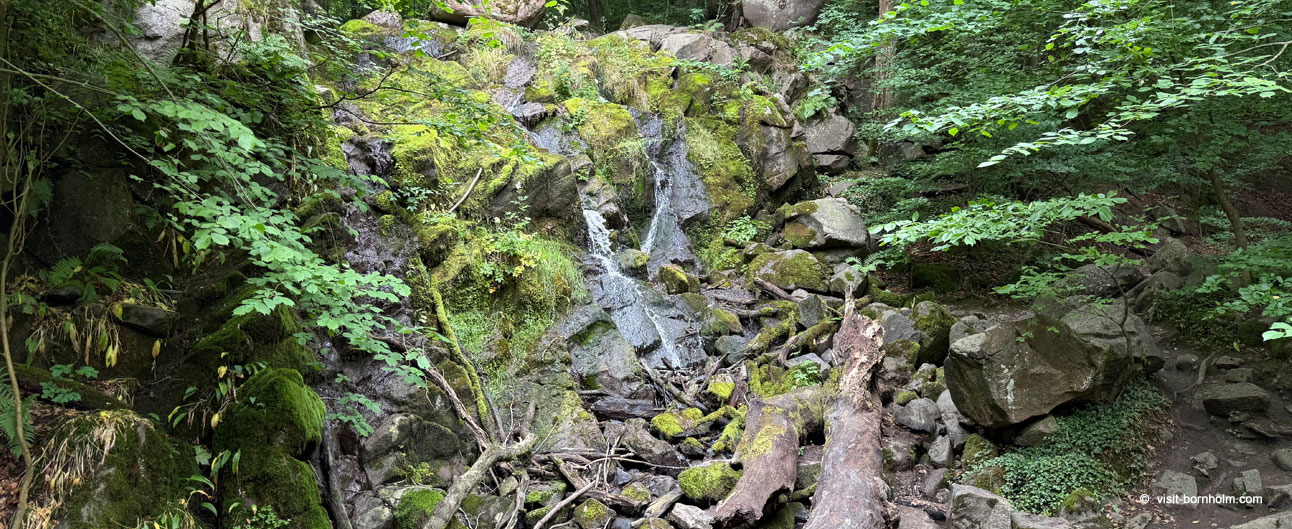
Bornholm is the only place in Denmark where granite bedrock and numerous rift valleys create the conditions for real waterfalls. On the island you'll find the country's third-highest waterfall, the most beautiful vertical drop in Scandinavia, and a coastal cascade with a medieval name. Each has its own character, unique natural surroundings, and a different season when it looks its most spectacular.
Below we present Bornholm's three most important waterfalls – from the most popular to the most unusual. All are free to visit year-round and fit perfectly into hiking routes across the island.
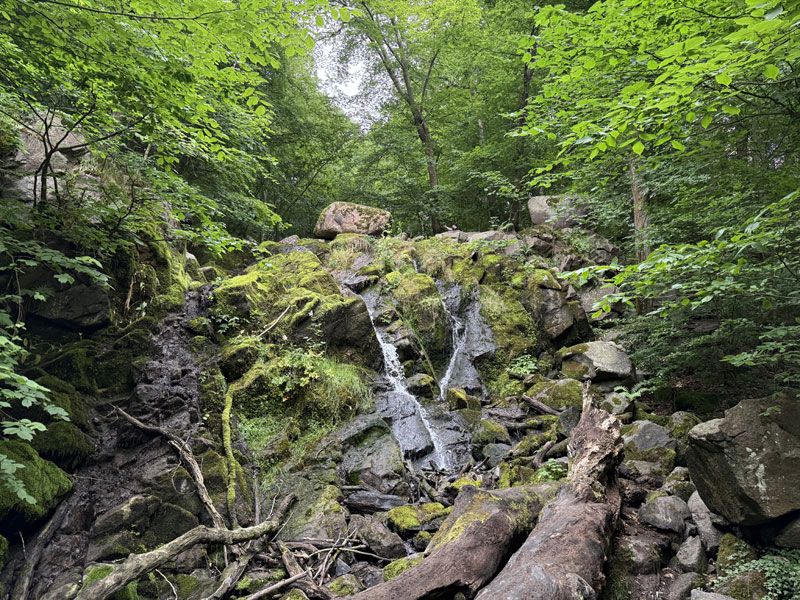
Døndalen – Denmark's Most Visited Waterfall
Denmark's third-highest waterfall, with a cascade dropping 20 metres in a picturesque valley on the east coast. Easy trail (2 km), the Amtmandsstenen viewpoint with a panorama of the Baltic Sea and Christiansø. Most beautiful in spring, when the forest floor is covered in anemones and wild garlic.
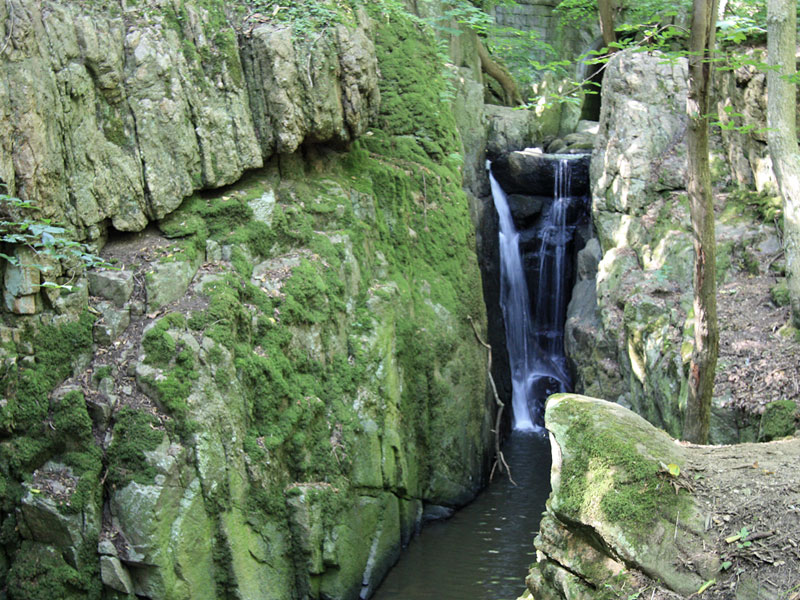
Stavehøl – Bornholm's Most Beautiful Waterfall
Denmark's highest uninterrupted drop – 5.6 metres through a narrow, 7-metre rock crevice deep in the Kobbeå valley. Hidden in lush, near-primeval forest. The white-throated dipper nests behind the curtain of water. A 2 km trail leads along the stream from Melsted.
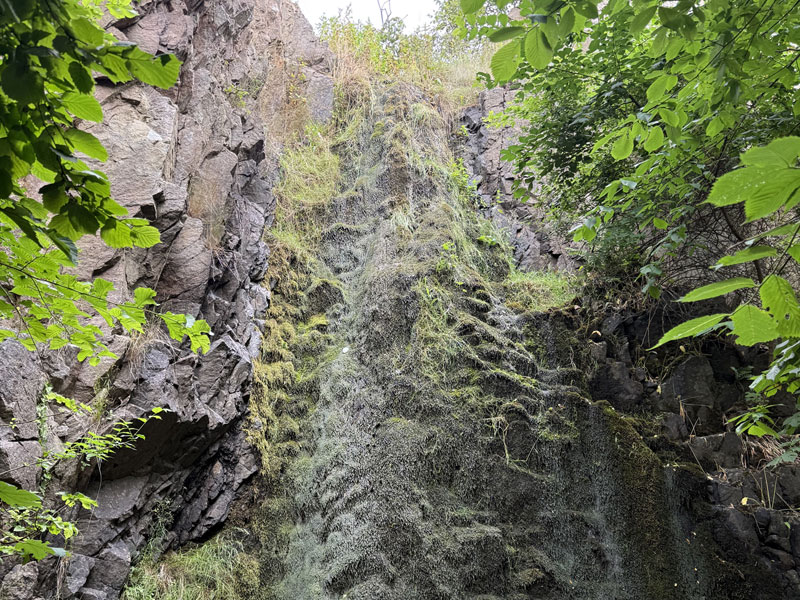
Pissebækken – Bornholm's Coastal Waterfall
A coastal waterfall with a free drop of over 8 metres, falling straight onto the rocks by the shore. A medieval name, rare ferns on the cliffs, and blue anemones in spring. Located on the Kyststien, just 500 m from Vang harbour, on the way to Hammershus castle.
Waterfalls on Bornholm are a product of the island's unique geology – granite bedrock cut by rift valleys and tectonic grabens creates conditions found nowhere else in Denmark. Besides the three main waterfalls, the island has a dozen smaller cascades and rock ledges worth discovering on foot. The best time to visit is spring, when meltwater fills the streams and the valley floors are carpeted with flowers. Bring wellies and a camera – Bornholm's waterfalls can surprise even seasoned travellers.


